

Working as a Temp Worker in Canada: Getting Your Work Permit in Order

Got a job as a temporary worker in Canada and don’t know where to start with the documentation? Don’t worry, we have compiled a complete list of everything you need to know about a work permit and other necessities. Canada has the Temporary Foreign Worker (TFW) program in place to enable employers to hire staff from other countries.

The TFW is an immigration option that allows individuals who are neither a citizen of Canada nor a permanent resident to work in Canada. The program facilitates the filling of positions that are not yet filled by Canadians or in some cases due to labour shortage.

Canada is a prime destination for foreigners who are seeking employment opportunities in foreign countries. Temporary jobs can also be counted as a good first step for those looking to immigrate permanently to the country.

A work permit is a legal document required to permit a foreign national to engage in employment while residing in Canada. Depending on the type of work, there are many different options for obtaining a permit for work in Canada. While some would simply require a job offer from a Canadian employer, others need the employer to provide a Labour Market Impact Assessment (LMIA).

It is important to keep in mind that even LMIA exempt foreign workers need to have their documents in order. This is to ensure they are granted entry into Canada. There are two ways to obtain a Canadian work permit: a closed (restricted) permit or an open permit.

A closed permit is tied to specific employers. This means that a foreign national issued a closed permit has to remain working with the same employer at the same location unless they change their work permit.

The processing fee for a closed work permit is $155 CAD per person or $255 per person for an open permit according to Canadim.com. In the case you are restoring a permit or applying as a group of performing artists, there will be an additional fee.

What Are You Allowed To Do on a Canadian Work Permit:

The type of permit issued to you will dictate the sort of limitations attached to your authorization. Work permit holders are not considered to be permanent residents and must leave the country at the end of their authorized stay. In the case a temporary foreign worker decides to remain permanently in Canada, they need to check their eligibility before applying for citizenship. If you have applied for an employer-supported work permit, you may be eligible to have your family accompany you to Canada.

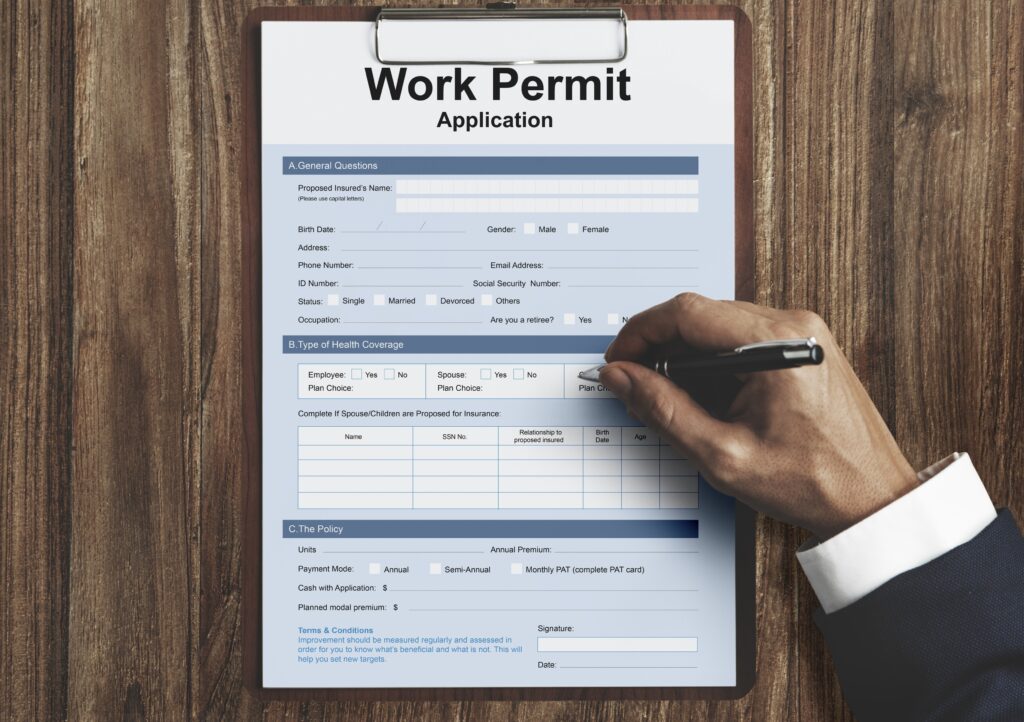
Work permit form being filled

If the children of the temporary foreign worker are of school-going age, they may attend Canadian schools. They can do so without requiring a separate study permit. Once you have applied for a closed permit, your spouse may be eligible for an open work visa.

The processing of a work permit application depends on the type of permit. An applicant’s country of origin will also determine the time taken to process the permit. Typically the processing time can range anywhere from a few weeks to several months.

“There are no secrets to success. It is the result of preparation, hard work, and learning from failure.” – Colin Powell

List of Documents Required to Apply for the Work Permit:

A foreign worker needs to make sure they have all the following documents ready. Some of these documents have to be provided by their employer:

  • A valid document for travel (like a passport)
  • Two recent photos of yourself and photos of the family members accompanying you (if any)
  • Evidence that you meet the requirements of the job you have been hired for
  • CV/resume
  • A written letter of employment.
  • Completed required application forms
  • Proof of relationship with spouse, children, or common-law partners
  • Medical exam results
  • Evidence of financial means to stay in Canada and return to home country
  • Proof of payment of applicable government fees
  • Labour Market Impact Assessment (LMIA) (if applicable)
  • Certificat d’acceptation du Québec (CAQ) (if applicable)

Disclaimer: Please note that these guidelines and regulations are only recent updates as of March 2022, and may change at a later date. Keep this in mind going forward and be sure to keep yourself apprised of the latest developments in guidelines and rules issued by the Canadian government before the worker immigrates. For more information go to the official Canadian government website.

Recent Posts

How job agencies in etobicoke help you land work faster

Discover how job agencies in Etobicoke connect you with employers faster, streamline interviews, and help you land temp or permanent work—especially in manufacturing and skilled trades.
Read More

How Staffing Agencies in Toronto Support Growth for Employers and Candidates

Discover how staffing agencies in Toronto help employers scale faster and help candidates land better roles—temporary, contract, and direct-hire pathways included.
Read More

In-Demand Jobs in Canada- Where Employers Are Hiring Right Now

Discover the most in-demand jobs in Canada right now—by industry, skills, and region—plus certifications, hiring tips, and where to apply with Pure Staffing Solutions.
Read More

How Recruitment Agencies Toronto Are Solving Skilled Labor Shortages

Discover how recruitment agencies Toronto are tackling the skilled labor shortage by connecting employers with qualified trades professionals. Learn how staffing agencies Toronto support businesses and job seekers across manufacturing and industrial sectors.
Read More

Why a Job Agency Brampton Is the Smart Choice for Career Stability

Looking for long-term career stability in Brampton? Discover how a job agency in Brampton can connect you with secure skilled trades and manufacturing jobs, faster placements, and long-term growth opportunities.
Read More

Top 5 Canadian Background Check Companies for Staffing Agencies in 2026

Comparing the top Canadian background check companies for staffing agencies in 2026. See which providers offer the fastest turnaround, lead generation, duplicate detection, and transparent pricing for high-volume hiring.
Read More